The Reality of Hazardous Working Conditions in Orlando Amusement Parks
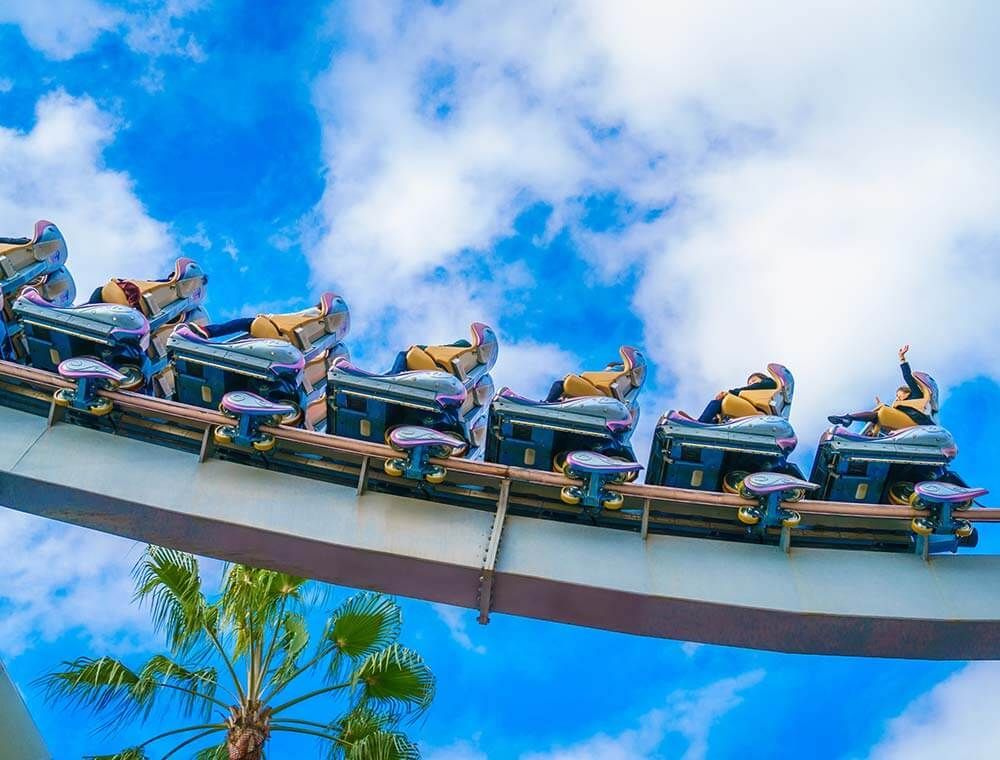
Orlando is known around the world for its amusement parks, theme parks, resorts, rides, shows, restaurants, and guest experiences. For visitors, these places are built to feel magical. For employees, however, the work can be physically demanding, fast-paced, repetitive, and sometimes dangerous.
The hazards of working in an amusement park are very real. Behind every ride, parade, restaurant, hotel, costume, maintenance area, and guest service station are workers who keep the parks running. Many are on their feet for long shifts. Others work around machinery, moving ride systems, hot kitchens, chemicals, animals, outdoor heat, slippery surfaces, heavy equipment, or large crowds.
When an amusement park worker gets injured, the situation can quickly become stressful. Medical care may be delayed. A supervisor may minimize the injury. The insurance company may question whether the injury really happened at work. Some workers may be afraid to report an accident because they worry about losing hours, losing their job, or being treated differently.
If you work at an Orlando amusement park and were hurt on the job, you need to understand the risks, your rights, and the steps that can protect your workers’ compensation claim. A
theme park workers’ compensation lawyer can help you report the injury properly, gather medical evidence, deal with insurance issues, and pursue the benefits you may be entitled to.
Why Amusement Park Jobs Can Be More Dangerous Than They Look
Many amusement park jobs are designed around guest experience. Employees are expected to be friendly, alert, fast, and professional, often while working in heat, rain, crowds, noise, or high-pressure conditions.
These workplaces can involve many moving parts at once. A ride operator may be responsible for guest safety while standing for hours. A maintenance worker may inspect or repair equipment before the park opens. A food service worker may move quickly between hot surfaces, wet floors, and sharp tools. A performer may dance, lift, or repeat the same movements multiple times per day. A custodial worker may clean spills, lift trash bags, and handle chemicals.
The work may look simple from the outside, but the risks can be serious.
Common Hazards of Working in an Amusement Park
Amusement park employees can face many types of workplace hazards depending on their role, location, and daily duties.
| Workplace Hazard | Where It May Happen | Possible Injuries |
|---|---|---|
| Slippery floors and walkways | Restaurants, water rides, restrooms, backstage areas, and outdoor walkways | Falls, knee injuries, back injuries, wrist injuries, head injuries |
| Repetitive movements | Ride operations, merchandise, food service, costuming, performance roles | Wrist injuries, shoulder pain, tendonitis, and carpal tunnel symptoms |
| Heavy lifting | Maintenance, custodial, warehouse, food service, and hotel operations | Back injuries, herniated discs, shoulder injuries, muscle strains |
| Heat exposure | Outdoor attractions, parking, lifeguard stations, entertainment, landscaping | Heat exhaustion, dehydration, fainting, heat-related illness |
| Moving machinery | Ride systems, maintenance areas, kitchens, laundry, equipment rooms | Crush injuries, amputations, fractures, burns |
| Chemical exposure | Custodial work, pools, kitchens, maintenance, landscaping | Respiratory issues, skin burns, eye injuries, allergic reactions |
| Guest incidents | Security, ride operations, hospitality, restaurants, and front gate roles | Assault injuries, sprains, emotional distress, and head injuries |
| Noise and crowd pressure | Shows, parades, ride queues, and entertainment areas | Hearing issues, stress-related symptoms, distraction-related injuries |
Injury Scenarios Amusement Park Workers May Face
Every workplace injury is different, but certain scenarios come up often in theme park and amusement park jobs.
Scenario 1: A Ride Operator Slips While Loading Guests
A ride operator is helping guests board a ride during a busy shift. The platform is wet from rain or water tracked in from nearby areas. The worker slips, twists their knee, and grabs the railing to stop the fall. At the end of the shift, the knee is swollen and painful.
This type of injury may seem minor at first, but knee injuries can become serious. Workers may need imaging, physical therapy, work restrictions, or even surgery. The worker should report the injury right away and ask for authorized workers’ compensation medical care.
Scenario 2: A Food Service Worker Burns Their Hand
A food service employee is working during a rush. While handling hot equipment, oil, steam, or heated trays, the worker suffers a burn to the hand or arm. A manager may offer basic first aid and ask the worker to continue working.
Burn injuries should be taken seriously, especially if there is blistering, nerve pain, scarring, infection risk, or loss of movement. Food service workers rely heavily on their hands, and even a small injury can affect their ability to work.
Scenario 3: A Maintenance Worker Is Hurt While Repairing Equipment
Maintenance workers may work around ride systems, tools, electrical equipment, lifts, ladders, confined spaces, and moving parts. If a worker is struck by equipment, falls from a height, or suffers a crush injury, the consequences can be severe.
These cases may involve serious medical treatment, missed work, permanent restrictions, or disputes over whether safety procedures were followed. Workers should report the injury immediately, request authorized medical care, and document what happened.
Scenario 4: A Performer Develops a Repetitive Stress Injury
Performers, dancers, actors, stunt workers, musicians, and character performers may repeat the same movements many times a day. Over time, the body can break down. Shoulder pain, knee pain, ankle injuries, back pain, neck pain, and repetitive stress conditions can make it difficult to continue performing.
These injuries are sometimes harder to prove because they may develop gradually. A worker may not have one single accident date. Still, repetitive stress injuries can be work-related and may qualify for workers’ compensation benefits.
Scenario 5: A Custodial Worker Is Injured Lifting Heavy Trash
A custodial employee may lift heavy bags, push carts, clean spills, bend repeatedly, or handle chemicals. One wrong lift can cause a back injury, shoulder injury, or herniated disc. These injuries can affect nearly every part of daily life, from walking and sleeping to driving and working.
Back injuries are often disputed by insurance companies, especially if the worker had prior pain. That does not automatically mean the injury is not covered. Workers should report the accident and explain exactly what changed after the workplace incident.
Injury Risks by Type of Amusement Park Worker
Different amusement park roles come with different risks. This table can help workers understand what to watch for and what to do if they are hurt.
| Type of Worker | Common Risks | Possible Injuries | What to Do |
|---|---|---|---|
| Ride operators | Standing for long periods, moving gates, wet platforms, and guest loading | Knee injuries, back pain, falls, wrist injuries | Report the injury, identify witnesses, and request medical care |
| Maintenance workers | Machinery, ladders, tools, electrical systems, ride equipment | Fractures, crush injuries, burns, and back injuries | Report immediately, document the equipment involved, and ask for authorized care |
| Food service workers | Hot surfaces, knives, wet floors, and lifting supplies | Burns, cuts, slips, and back injuries | Report the accident, photograph visible injuries, and save medical notes |
| Custodial workers | Chemicals, lifting, spills, repetitive bending | Respiratory issues, skin burns, back injuries, falls | Report symptoms and exposure, keep product names if possible |
| Performers and entertainers | Repetitive movement, costumes, heat, dancing, stunts | Sprains, strains, heat illness, repetitive stress injuries | Report pain early, explain repeated job duties, and ask for an evaluation |
| Security workers | Guest confrontations, crowd control, and long shifts | Assault injuries, falls, stress-related injuries | Report incident details, identify witnesses, and request medical care |
| Lifeguards and water park staff | Heat, wet surfaces, rescues, chemicals | Heat illness, slips, shoulder injuries, and chemical exposure | Report symptoms quickly, ask for treatment, and document conditions |
| Hotel and resort staff | Lifting, housekeeping, laundry equipment, wet floors | Back injuries, shoulder injuries, knee injuries, wrist injuries | Report the injury in writing and save copies |
What Makes Amusement Park Injury Claims Complicated?
Amusement park injury claims can be challenging because these employers are often large companies with internal reporting systems, insurance teams, HR departments, and strict procedures. Workers may feel pressure to follow company instructions without fully understanding their rights.
Common problems include:
- The employer says the injury was not reported correctly.
- The insurance company delays medical treatment.
- The worker is sent back to work before they feel ready.
- The doctor does not understand the physical demands of the job.
- The injury is blamed on a pre-existing condition.
- The worker is told there is no light duty available.
- Wage checks are late, missing, or too low.
- The claim is denied after the worker has already missed time.
If any of these issues happen, the worker should not assume the insurance company has the final say.
Reporting a Work Injury in Florida
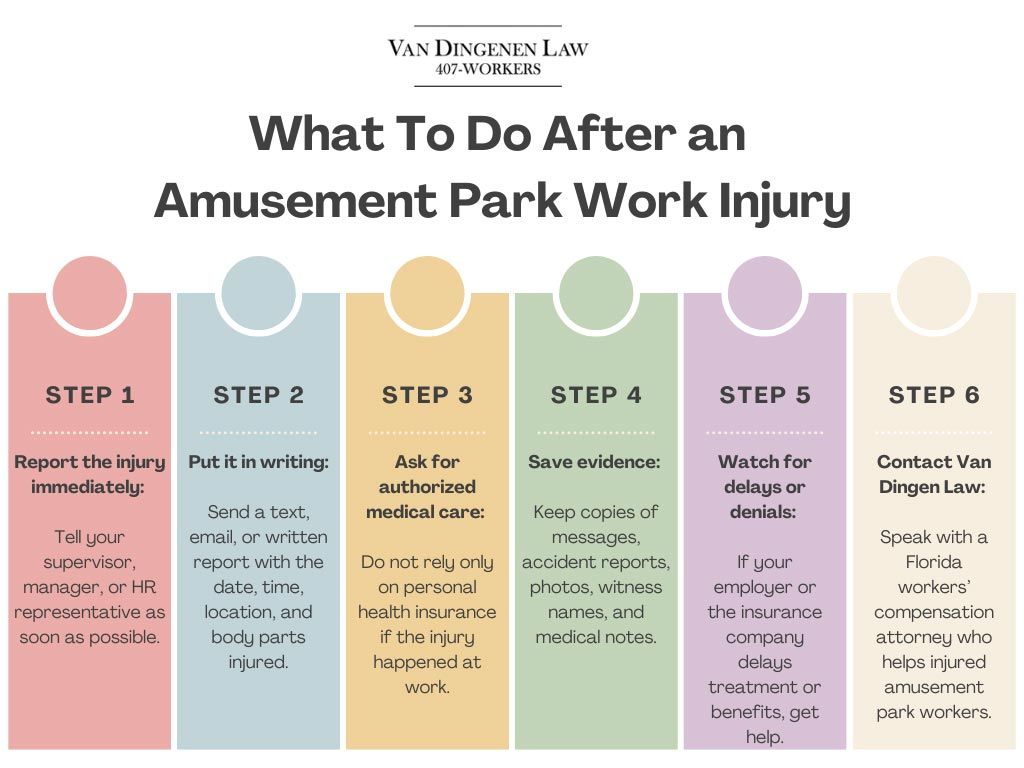
If you are hurt while working at an amusement park in Florida, you should report the injury as soon as possible. Florida generally requires injured workers to report a work-related accident within 30 days. Waiting too long can put your claim at risk.
Your report should include:
- Your name and job title
- Date and time of the accident
- Location of the accident
- What were you doing when the injury happened
- How the injury happened
- Body parts injured
- Symptoms you are feeling
- Witness names, if available
- Request for workers’ compensation medical care
It is best to report the injury in writing so you have proof. A text message, email, written form, or formal letter can help protect you if your employer later claims they were not notified.
What Benefits May Be Available After an Amusement Park Work Injury?
Florida workers’ compensation benefits may help injured workers receive medical care and partial wage replacement when they cannot work because of a job-related injury.
Depending on the case, benefits may include:
| Type of Benefit | What It May Cover |
|---|---|
| Authorized medical treatment | Doctor visits, imaging, physical therapy, medication, injections, and surgery |
| Lost wage benefits | Partial income replacement if you cannot work or have restrictions |
| Disability benefits | Benefits for temporary or permanent work-related limitations |
| Mileage reimbursement | Travel to and from authorized medical appointments |
| Vocational help | Support if you cannot return to your prior job, in some cases |
The insurance company may not explain every benefit available to you. If you are unsure what you should be receiving, it may be time to
hire a workers’ compensation attorney.
When Should an Amusement Park Worker Call Van Dingen Law?
You should consider calling Van Dingen Law if:
- Your employer refuses to report your injury.
- You are not receiving medical treatment.
- Your claim was denied.
- Your wage checks are late or missing.
- You were sent back to work too soon.
- You are being blamed for the accident.
- Your injury is getting worse.
- You are worried about retaliation.
- You do not understand what the insurance company is asking you to do.
- You work for a large theme park, resort, or amusement park and feel overwhelmed by the process.
You do not have to wait until everything goes wrong. Getting legal guidance early can help you avoid mistakes that may hurt your claim.
How Van Dingen Law Helps Orlando Amusement Park Employees
Van Dingenen Law helps injured workers across Florida with workers’ compensation claims. The firm focuses exclusively on workers’ compensation, which means its legal team understands how insurance companies handle claims, how benefits are supposed to work, and what injured employees can do when treatment or wage benefits are delayed or denied.
For Orlando amusement park employees, this experience matters. Theme park workers may face powerful employers, complicated reporting systems, and insurance companies that try to limit payouts. Van Dingen Law helps injured employees pursue medical care, lost wage benefits, disability benefits, and the support they need after a job-related injury.
Whether you work in ride operations, maintenance, food service, costuming, entertainment, custodial services, hospitality, security, animal care, landscaping, or another amusement park role, you deserve to understand your rights.
Injured while working at an Orlando amusement park?
Contact Van Dingen Law for a free case evaluation.
Amusement Park Workers Deserve Protection
The guest experience may be the public face of Orlando’s amusement parks, but workers are the people who make that experience possible. They operate rides, prepare food, clean facilities, perform shows, maintain equipment, protect guests, manage crowds, care for animals, support hotels, and keep the parks moving every day.
When those workers get hurt, they deserve to be taken seriously.
The hazards of working in an amusement park can lead to painful injuries, missed work, medical bills, and uncertainty about the future. Reporting the injury quickly, requesting authorized medical care, saving records, and speaking with an attorney when problems arise can help protect your claim.
If you were injured while working at an Orlando amusement park, Van Dingen Law is here to help.