Workers’ Compensation Benefits for Theme Park Employees
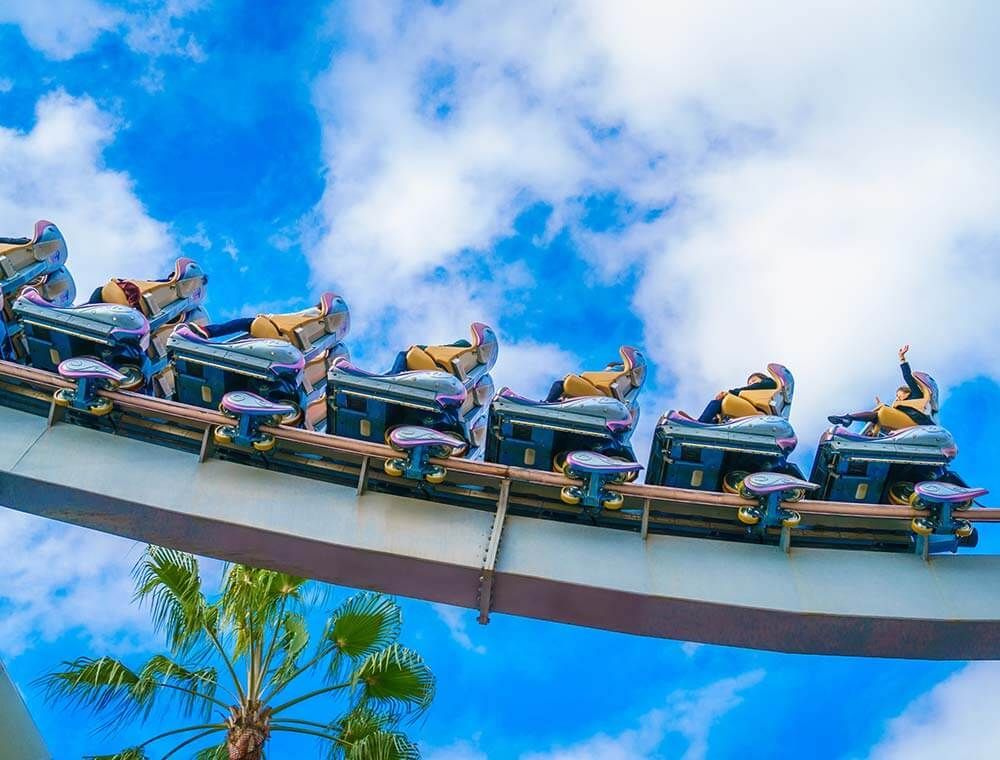
Florida is world-famous for its theme parks that provide entertainment for the whole family. With COVID-19 vaccinations proving safe and effective, and approximately 40% of the American population being fully vaccinated at the time of this writing, many of the biggest theme parks in Florida are open for business again with operations feeling pretty close to “normal.” For example, Universal Studios Florida and Walt Disney World have recently announced that all of their parks and the majority of their attractions are open.
The reopening of major theme parks has also created an opportunity for a hiring boom in Florida, so there could be thousands of new theme park employees on staff. If you’ve recently landed a job at Universal Studios, Disney World, or another popular theme park in Florida, then there is no better time than now to learn about your benefits under workers’ compensation. Many employers gloss over workers’ comp in training, so employees often feel uninformed and unprepared in the event that they do get hurt at work. With a brief review here, though, we hope you’ll have a much better basic understanding.
Important benefits for a Florida’s workers’ compensation claimant are:
- COVID-19 benefits: The Florida Division of Workers’ Compensation has stated that workers who have been exposed to the coronavirus as part of their usual job tasks would be eligible to receive workers’ compensation benefits while they recover. However, Florida does not have any heightened regulations that attempt to make it simpler for sick employees to get workers’ comp benefits after a COVID-19 diagnosis. Workers need to prove that they got sick while working at a theme park and not elsewhere, creating an uphill legal battle. The unfortunate truth is that COVID-related workers’ compensation claims in Florida are difficult to win, and many that have been filed since the summer of 2020 have been denied.
- Medical benefits: 100% of the medical bills related to treating your work-related injury should be paid by the workers’ compensation insurer. You need to use a treating physician that has been approved by the insurance company, though, and all treatments must be “necessary.” An elective treatment won’t be covered, and insurance companies will sometimes argue that a treatment your doctor thought was necessary was actually elective as an attempt to avoid paying your medical benefits. If this happens, then you should work with a Winter Haven workers' compensation attorney.
- Temporary disability benefits: If you are injured at work and cannot return to your normal job duties for 7 days, then you can get temporary disability benefits that pay two-thirds of your average weekly pre-injury wages. There is a minimum and maximum weekly pay allowance that can change each year, though. Your wage replacement benefits will continue until your treating physician approves you for work again, you have reached your maximum medical improvement (MMI), or you have received benefits for 104 or 260 weeks, depending on the severity of your disabilities. If you can return to work in a limited capacity, then you can be paid weekly benefits equal to 80% of the difference between your new income and 80% of your pre-injury income.
- Permanent impairment or total disability benefits: Severely injured theme park workers might require permanent impairment benefits and/or permanent total disability benefits. Permanent impairment benefits will pay 75% of your temporary total disability benefits rate in most cases until your evaluating doctor determines you can complete some form of work again. Permanent total disability benefits can pay your temporary total disability benefits rate until you are 75 years old. If you can’t qualify for Social Security benefits, then there is no age limit. Furthermore, amputations, traumatic brain injuries, and other catastrophic injuries might automatically qualify you for permanent total disability benefits.
- Vocational rehabilitation: A serious injury that prevents you from returning to your role in the theme park could qualify you for vocational rehabilitation benefits. You can get up to 26 weeks of training or up to 52 weeks of education to begin work in a different place of employment without paying any related costs yourself. Of course, your employer should first attempt to find work for you within the company that your treating physician approves. For example, if you were a ride operator who had to stand and walk for hours a day, but you suffered a back injury, then you might be reassigned to a seated cashier position for one of the park’s eateries.
- Death benefits: The theme parks in Florida have fairly encouraging track records for preventing employee deaths, but fatal accidents can and still do happen. When an employee dies due to a work-related injury or illness, then certain surviving family members can get death benefits that pay for funeral costs and burial expenses up to $7,500. Wage replacement benefits equal to two-thirds of the deceased’s average wages can also be provided, up to a $150,000 cap. The loss of a loved one in a workplace accident is devastating, both emotionally and financially. An experienced Orlando workers' compensation death benefits lawyer can help surviving family members pursue full death benefits, challenge denied claims, and secure the financial support they are entitled to under Florida law.
If you need help figuring out your workers’ compensation benefits as an injured theme park worker in Orlando or Central Florida, then Van Dingenen Law should be the first name to call. We can assist you with filing a claim, challenging a denial, creating a lawsuit, and more. Dial (407) 904-6339 and speak with our attorneys during a free consultation.
The post Workers’ Compensation Benefits for Theme Park Employees appeared first on Van Dingenen Law.